
Preserving and exploring knowledge
Inherited knowledge and new tools belong together. We explore the monastery church's history so that it can continue to be understood and shared.
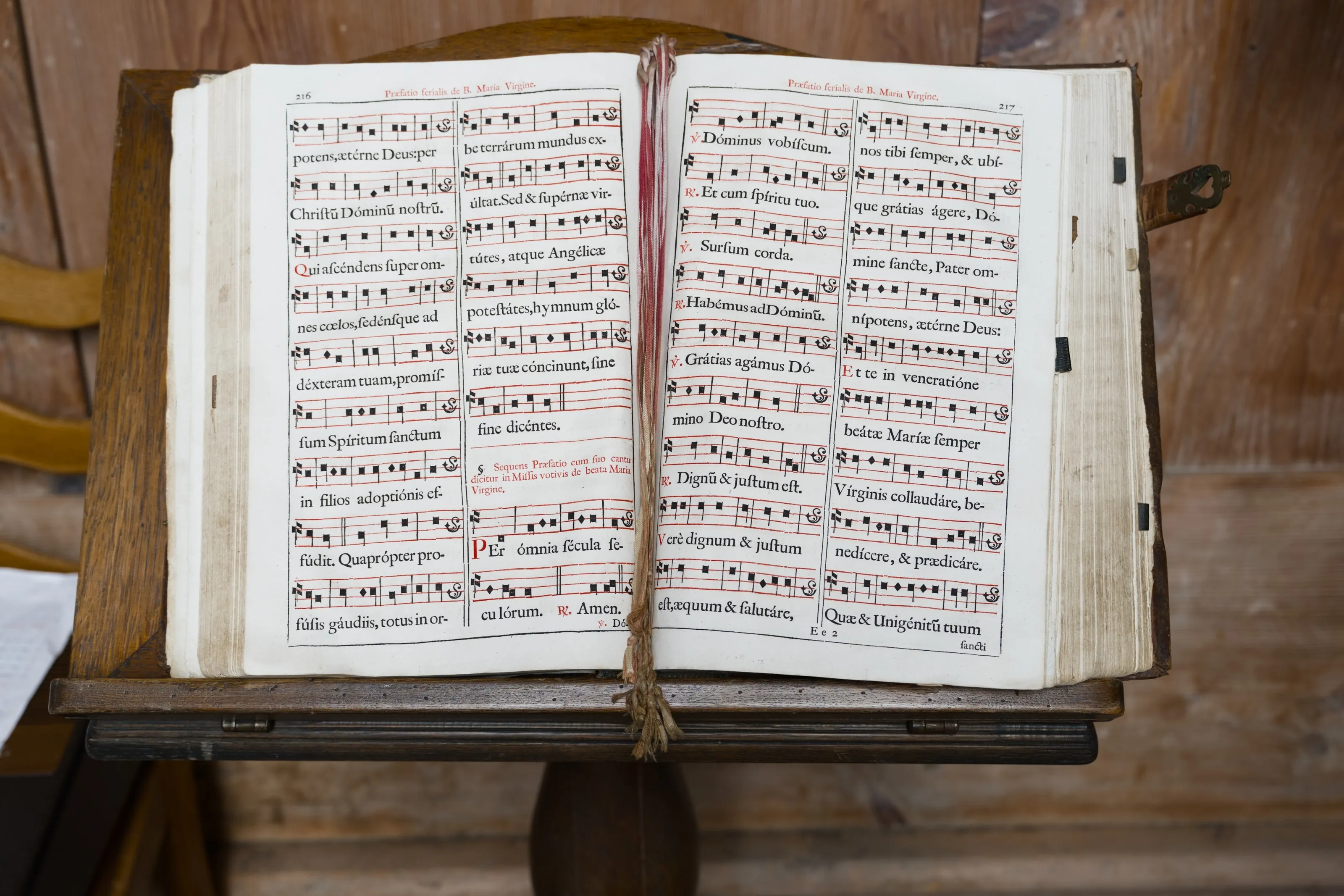
Bringing knowledge together
A church guide explains an altar. A conservation report records what survived in the organ. A photograph reveals a detail that is easily missed. Each source offers a different way into the monastery church. Together, they reveal how much knowledge about this place already exists.
The Friends bring publications, photographs and accounts together for their work in sharing the church’s history. Research by scholars and conservators, alongside local people’s contributions, provides the foundation. What has been researched, described and recorded over decades should remain discoverable and open to new questions. Preserving a building also means passing on knowledge of its history.
Preserving originals and making information findable
Digitised publications and an organised photograph collection help us find and compare material. We record where a source comes from, who wrote or photographed it and which edition we are using. Information thus remains connected to its origin, even when it becomes part of a new text.
Text recognition makes scanned book pages searchable. It helps locate names, places and subjects, but cannot replace looking at the page: particularly in older typefaces, letters, dates and captions can be misread. We therefore compare important details with the scan. Digital copies complement the originals; they do not make them unnecessary. Our working copies are not offered as public downloads. Copyright and personal information remain protected.
Checking sources and connecting findings
Different sources answer different questions. A contemporary account may describe the founding of an association, while a later study offers new findings about an artwork. An older text describes conditions at the time, not necessarily today. We aim to keep such distinctions visible.
We compare statements, check names and dates and distinguish documented facts from memories, traditions and interpretations. Where sources disagree, that uncertainty should remain visible. Our historical texts therefore refer to authors, publication years and specific printed pages. Full references are available under Sources and literature for anyone wishing to read further.
New tools and human responsibility
Artificial intelligence can also help explore the material: it supports us in organising information, finding connections and preparing drafts of accessible texts or translations. This makes larger collections manageable and helps us develop different approaches to a subject.
Responsibility for the result remains with the people who check and publish it. A convincing sentence is not evidence. AI outputs are therefore not used as historical sources; statements must be traceable to the actual documents. Nor do artificially generated images of the church replace our documentary photographs. New technology should help explore existing knowledge, not invent a different past.
Making knowledge accessible
This work underpins the texts and image choices on our website and in our anniversary booklet. It also provides a foundation for the planned audio tours: stories about architecture, art and the organ that visitors will eventually be able to hear on their own smartphones.
Old records, more recent research and present-day questions can thus come together. Knowledge preserved in different places offers new ways to get to know the monastery church, both for people from Maihingen and for visitors.
Do you have documents, photographs or memories that could add to our understanding? Please get in touch. Together we can explore what the material tells us and how it might be used with your agreement.