
The Freundeskreis
The rescue of a silent organ created a community that connects people with Klosterkirche Maihingen.
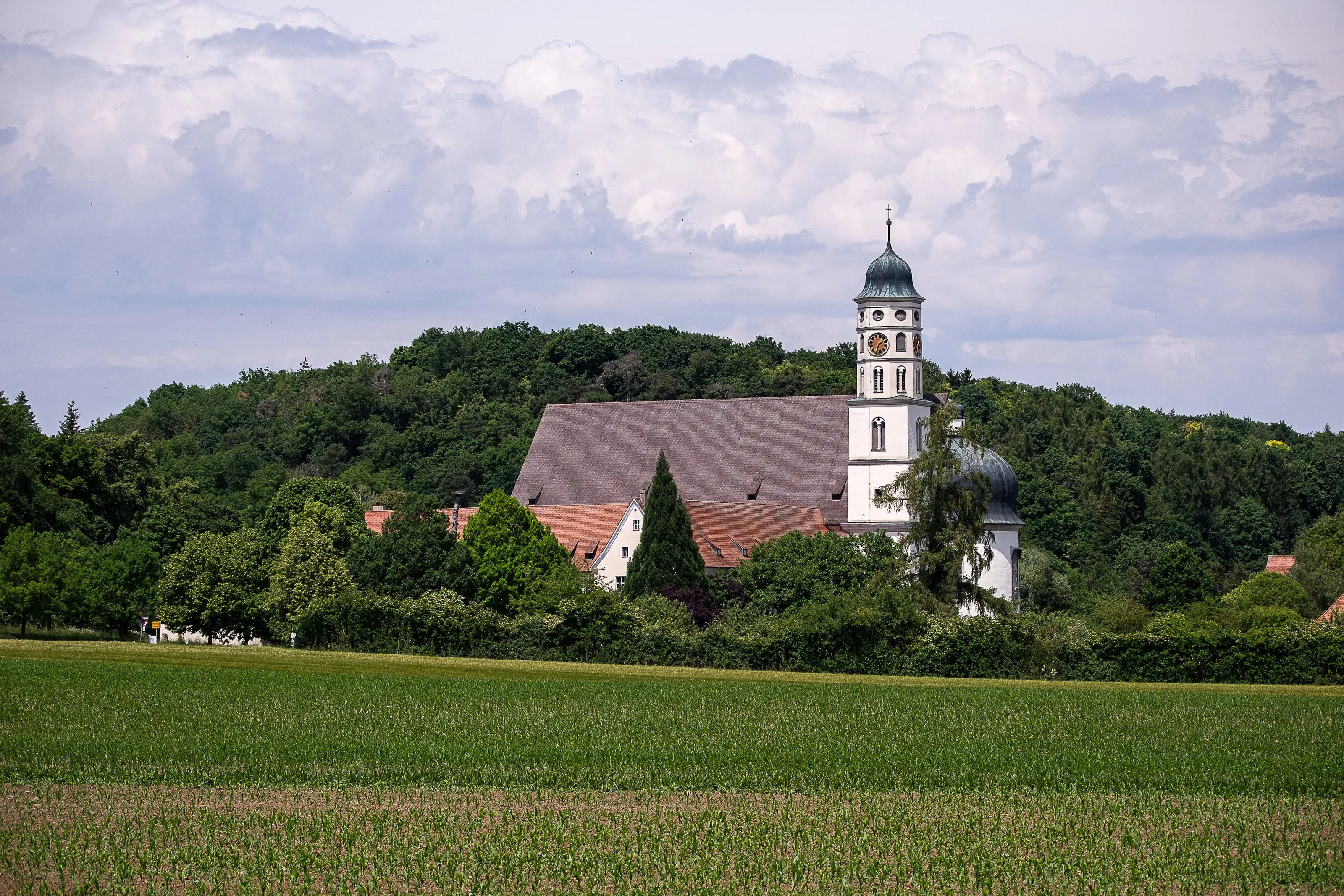
A restored church, a magnificent organ — and not a sound. When the former monastery church reopened to the public in October 1983 after four years of conservation work, the instrument on the west gallery remained silent. Earlier attempts to repair it had failed chiefly because of the cost. The Freundeskreis — the friends’ association — grew out of this difficult situation only a few years later.SourcesDr. Josef Hopfenzitz (ed.) 1991, pp. 12–13
Its story shows what people can achieve when they take shared responsibility for a remarkable place. It begins with the organ. But it does not end there.
A church needs people
Klosterkirche Maihingen did not have a parish community of its own that could naturally have carried such a project. Rescuing the organ therefore required a new kind of community: people from Maihingen and far beyond who could attract attention, bring specialists together and build support.
At the initiative of Dr. Josef Hopfenzitz, the Freundeskreis Klosterkirche Maihingen was founded on 5 July 1987, following a festive service. It was soon formally registered as an association. Its first priority was to provide moral and financial support for the organ restoration.SourcesDr. Josef Hopfenzitz (ed.) 1991, pp. 13–15Freundeskreis Klosterkirche Maihingen 1987, PDF pp. 1, 2 and 4
The church had gained something it had lacked since the end of the monastery: a circle of people who felt a lasting responsibility for its future.
An idea becomes a movement
Interest was not confined to the village. During the planning phase, the association grew to 180 members according to the 1991 account; more than 100 of them lived outside Maihingen. Newspaper reports brought the project to wider attention, sacred concerts drew people into the church, and donations and public grants helped finance the work. These are figures from the association’s founding years, not current membership numbers. They nevertheless show how quickly the church came to be understood as the shared heritage of a wider region.SourcesDr. Josef Hopfenzitz (ed.) 1991, pp. 15–17
The Freundeskreis did more than raise money. It gave a demanding conservation project a public voice. Voluntary commitment connected the Church, heritage specialists, public authorities and expert workshops, turning a long-held hope into a practical plan.
Restoration took place from 1988 to 1990. The organ was already heard provisionally at the symposium on 21 September 1988; on Easter Monday, 1 April 1991, the restored Baumeister organ was rededicated. Restoration, the first provisional playing and rededication are distinct steps in this history.SourcesMichael Petzet (ed.) 1991, pp. 32, 38Dr. Josef Hopfenzitz 2009, p. 27Dr. Josef Hopfenzitz 1991, PDF p. 1
More than a restoration society
What was to follow that success? An answer had already begun to emerge before the work was complete. The organ was not to be preserved as a silent museum object. A 1989 report instead proposed opening the church to a wide public and developing it as a focal point for sacred music.SourcesFranz Zekl 2007, p. 453
This wider perspective was already present at the foundation: the 1987 assembly connected organ restoration and church music with art-historical and historical concerns.SourcesFreundeskreis Klosterkirche Maihingen 1987, PDF pp. 2 and 4
The concern was therefore not only an instrument, but also how a historic place could remain alive. Writing in 2007, Franz Zekl described a varied annual programme of choral music and concerts, cooperation with the parish, and efforts to carry inherited traditions into the present. He regarded the connection between local identity and faith as a particular concern of the Freundeskreis.SourcesFranz Zekl 2007, pp. 541–542
That is still the strength of the original idea: preservation here does not mean stopping time. It means caring for the church, telling its stories clearly, and keeping space open for music, encounter and spiritual experience.
Bells, clock faces and the Holy Sepulchre
Other tasks followed the organ restoration. In 2004, the association raised donations towards replacing missing bells. The tower received an eastern clock face in 2005 and a southern one in 2006. These steps form part of the recent history of a building that continues to need care and support.SourcesFranz Zekl 2007, pp. 526, 538–539Dr. Josef Hopfenzitz 2009, pp. 5, 29
In 2013–2014, Roland Vogel’s conservation workshop conserved and restored the Holy Sepulchre: a rare surviving arrangement of painted scenery used to contemplate the Passion and Resurrection. The work involved securing fragile painted surfaces and preserving the surviving structure.SourcesRoland Vogel 2014, pp. 1, 4, 128, 139
The current association chronicle also records its support for the restoration of the Madonna in the side altar and describes work on the Kerkerhäuschen, the small devotional structure beside the church. The Friends, church administration, municipality and diocese collaborated on its restoration in 2025. The diocese funded the restoration of the figure of the Scourged Christ, while the municipality supported work on the exterior. These recent details come from the association chronicle compiled for the anniversary year.
Culture, spirituality and community
The monastery church is a cultural, spiritual and social place. Music and art belong here alongside quiet, questions and encounters. We want to bring these three aspects closer together. You do not need to have studied art history, know organ music or share a particular faith to take part.
Photography and encounters offer other ways to connect: Friendships and partnerships introduces Kloster Maihingen, Fotofreunde Harburg and the municipality of Maihingen.
In 2027, the Friends turn 40. The anniversary programme brings together concerts and shared singing; the audio tours will make the church’s stories accessible on visitors’ own smartphones. Both serve the same purpose: caring for the place and sharing its significance with others.
Working with sources is an important foundation for this. We collect and digitise publications, photographs and inherited knowledge, preparing them for new ways of discovering the church. Preserving and exploring knowledge explains how we bring earlier research, personal contributions and today’s technical possibilities together.
The association connects voluntary commitment with the work of the responsible church and heritage bodies. It raises awareness, supports projects and events, and invites new members and benefactors to share that responsibility. What began with a silent organ in 1987 therefore remains an open invitation: Klosterkirche Maihingen should not merely survive. It should continue to move people, prompt questions and bring them together.
You can help carry this work forward by becoming a member, making a donation or experiencing the church at one of its events. Ideas and practical help are welcome. So are members who wish to support the association without having time to volunteer. Every membership strengthens the community’s backing for the monastery church.
The story of the instrument that started it all continues on the Baumeister organ page. Full historical references appear under Sources and literature.